Hooksnap vs SnapThumb for YouTube Thumbnails (2026)
SnapThumb is a prompt-based AI thumbnail generator. Hooksnap analyzes your actual video. Where each wins, where each falls short, and what the data says.
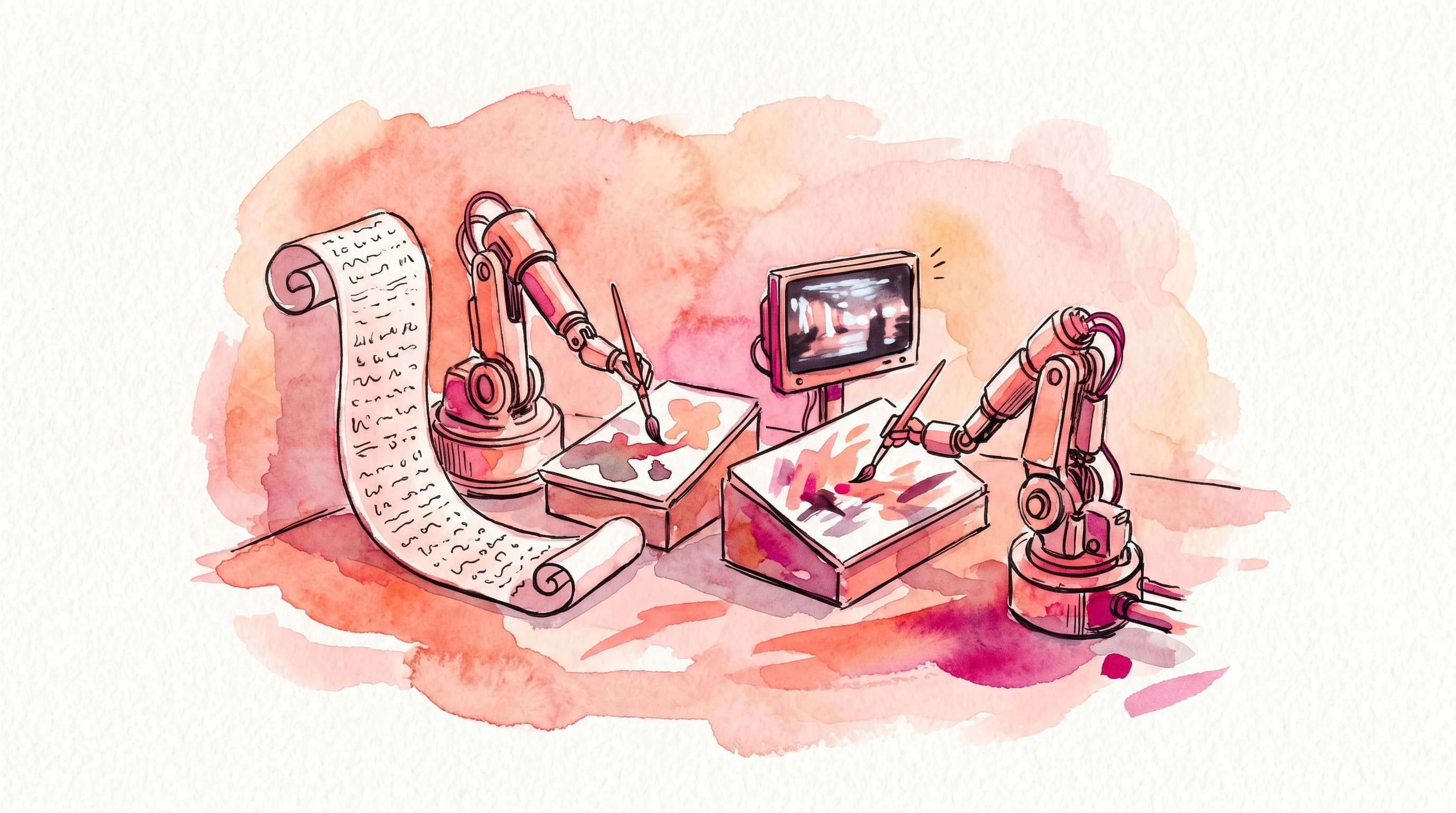
I built Hooksnap, so this comparison comes with my obvious bias. I am going to try to keep it honest anyway, because SnapThumb is genuinely interesting — it represents a category of small, fast, prompt-based AI thumbnail tools that have multiplied in 2026. There are dozens of them now. Most look interchangeable on the surface. The question is whether prompt-based generation is the right approach for YouTube thumbnails at all.
SnapThumb and Hooksnap are both labeled "AI thumbnail generators," but the architecture under each is completely different. That architecture decides what you can do, what you can not do, and where the CTR actually comes from. So let me walk through it honestly.
Quick Answer
SnapThumb is a prompt-based AI thumbnail generator. You describe what you want, the system generates a thumbnail image, you adjust if needed, and you download. There is no video analysis, no transcript reading, no A/B testing system, and no built-in scoring. Best for creators who want fast image generation from text descriptions and do not need the thumbnail to reflect a specific video.
Hooksnap is a video-aware AI thumbnail generator. You paste a YouTube URL, the system analyzes the video — frames, transcript, topic, emotional peaks — and generates branded thumbnails in under 60 seconds. A/B testing, thumbnail scoring, and a brand template system are included at every tier. Best for creators who publish regularly and want thumbnails that match the video they made.
If you are producing thumbnails for videos that do not exist yet (channel art, generic content, mockups), SnapThumb's prompt-only model is fine. If your workflow is "video → thumbnail → upload" on a recurring cadence, the video-aware approach saves time and avoids the prompt-tax that prompt-based tools quietly charge you.
What Each Tool Is Actually Built For
Most comparisons of small AI thumbnail tools get the framing wrong. They list features side-by-side as if both tools are solving the same problem. They are not.
SnapThumb is a prompt-based image generator wrapped around a YouTube thumbnail aspect ratio. You provide the creative direction in text — "tech reviewer holding a phone, shocked face, bold red text saying APPLE LIED" — and the model produces a 1280×720 image. The work of translating your video into a prompt is your job. Editing the output is your job. Picking which variant performs best is your job.
Hooksnap is a video analysis pipeline with a thumbnail generator on the end of it. Paste a YouTube URL, the system downloads the video, extracts key frames, reads the transcript, identifies emotionally compelling moments, and generates thumbnails using your brand template. No prompt writing. No template selection. No social posts, no ads, no blog headers — just thumbnails built from your video.
That difference in scope and architecture drives every comparison point that follows.
Where SnapThumb Wins
I want to start here because it matters.
Speed for Pre-Production and Mockups
SnapThumb has a real advantage when there is no video yet. If you are pitching a sponsor, designing channel art, or sketching a thumbnail concept before you film, prompt-based tools are the right shape for the job. You describe what you want, you get a usable image in under a minute, you iterate via more prompts.
Hooksnap cannot help here. The system requires a YouTube URL to function, so any pre-production workflow falls outside its scope. Most creators do not realize how much of their thumbnail thinking happens before the video exists, and prompt tools serve that phase better than video-aware tools.
Lower Friction for First-Time Users
You do not need a published video, a YouTube account, or any backend setup to use SnapThumb. Open the page, type a prompt, get an image. For a creator evaluating whether AI thumbnails are worth the effort at all, that is the lowest possible barrier.
Hooksnap requires a YouTube URL — typically a real upload, public or unlisted. For creators who have not published anything yet, that gate is real.
A Genre of "Faceless" and Concept-First Channels
A specific creator pattern fits prompt-based tools well: faceless commentary channels, animation channels, slideshow channels, and any format where the thumbnail does not need to match a specific live-action moment. For these formats, prompt-based AI is often the right tool. The visual is conceptual, not literal, so a video-aware system does not add much.
For everything else — face cams, vlogs, tutorials, reviews, gameplay — the prompt-based approach makes a tradeoff most creators do not realize they are making.
Where SnapThumb Falls Short for YouTube-Specific Work
Here is where the honest part of this comparison gets uncomfortable.
Prompt-Based Thumbnails Are Not Actually About Your Video
This is the structural limitation. SnapThumb does not know what your video looks like, what you said, what you showed, or which moments drove the energy. You give it a description in text and it generates an image that matches the description.
Why this matters: the YouTube algorithm rewards Quality CTR — clicks that lead to retention, not just clicks. A thumbnail that misrepresents the video gets the click but tanks watch time, which in 2026 actively demotes the video in recommendations. The platform now evaluates not just whether people click, but what happens in the 30 seconds after they do.
A prompt-based thumbnail is at structural risk of misrepresentation, because the prompt writer (you) is approximating what the video looks like. The model is approximating what your prompt means. Two layers of approximation between the video and the thumbnail.
Industry analyses are explicit about this. A 2026 review of the prompt-based vs video-aware split notes that "A real frame from the video rather than AI-generated faces is important because viewers click on what they expect to see, and AI-generated faces that do not appear in the video are a CTR trap". The trap is invisible at first because the click rate looks fine, but the retention drop quietly demotes future videos as well.
No Built-In A/B Testing System
SnapThumb does not include an A/B testing workflow. You can generate multiple variants by re-prompting, but you have to manage the test yourself — exporting each variant, uploading separately through YouTube Studio A/B testing, tracking which performed best, learning from it.
In practice, this overhead means most creators do not run tests. They pick the variant they like, publish it, and move on. The systematic feedback loop that A/B testing creates simply does not get built.
According to YouTube Studio's own A/B testing data summarized by industry analysts, creators who systematically test thumbnails see an average 20% CTR lift. Tools that build A/B testing into the workflow get more creators to do it. Tools that require manual orchestration get fewer creators to do it.
Style Inconsistency Across Generations
A common pattern in prompt-based AI tools is that two generations with similar prompts produce visually inconsistent results. The font weights drift. The color treatments shift. The composition flips. Over a channel's catalog, this fragments brand identity.
A 2026 evaluation of AI thumbnail tools called this out directly: "style inconsistency compounds this problem as each generation produces different aesthetics". For creators trying to build a recognizable thumbnail style — the kind that makes a viewer recognize your video at a glance in the suggested feed — prompt-based tools fight against you.
Hooksnap addresses this with a brand template system. You set the template once (fonts, color palette, logo placement, text zones), and every generation respects that template. The brand is enforced by the system, not by your prompt-writing skill.
Time Cost of Prompt Engineering Adds Up
Industry data on AI thumbnail time-to-output is informative: AI thumbnail generation typically takes 8-12 minutes end-to-end when including review and edits. Most of that time is not the generation itself — it is the prompt engineering, the re-prompting, the editing, and the variant management.
Hooksnap removes prompt writing from the workflow. You paste a URL. The system handles the rest. End-to-end time is closer to 60-90 seconds because the only decision you make is whether to ship the variant you got or generate again.
For a creator publishing one video per week, the savings compound. For creators publishing 3+ videos per week, the gap turns into more than 100 hours per year.
Where Hooksnap Wins
Video-Aware Generation
The core difference is that Hooksnap starts with your content. Paste any YouTube URL — published or unlisted — and the system analyzes the actual video. It extracts key frames, reads the transcript, identifies emotionally compelling moments, and understands the topic well enough to generate thumbnails that represent what the video is actually about.
This matters for CTR because relevance matters. A thumbnail that accurately represents the video drives clicks that retain. A thumbnail that misrepresents the video drives clicks that bounce. The platform tracks both signals and weights them in algorithmic recommendations.
For high-volume creators, this is the difference between a 30-minute thumbnail and a 30-second thumbnail.
Brand Consistency at Speed
Hooksnap applies your brand template — fonts, colors, logo placement, text zones — automatically to every thumbnail it generates. You set up the brand once. Every output reflects it.
SnapThumb's prompt-based model requires you to encode the brand in every prompt: "use my channel's red and yellow color palette, bold black text, Bebas Neue font, logo bottom-left." Most creators skip this consistency work because it slows down generation, which is exactly the speed advantage they came for in the first place.
A useful gut-check before publishing: run your thumbnail through the Hooksnap Thumbnail Checker to see how it scales on mobile, where over 70% of YouTube watch time happens.
See what AI generates from your actual video.
Paste any YouTube URL and get AI-branded thumbnails in under 60 seconds. No prompts. No template selection. Just thumbnails built from your content.
Try Hooksnap FreeBuilt-In A/B Testing
Hooksnap generates multiple thumbnail variants per video by default. You get three options from a single analysis, each with a different visual approach, and you can test them directly using YouTube Studio's A/B testing feature.
The A/B testing flow happens by default, not as an afterthought. With SnapThumb, generating three distinct variants means writing three different prompts, paying for three generations, and manually orchestrating the test. With Hooksnap, three variants happen automatically from a single analysis.
This matters because the systematic feedback loop is what drives long-term thumbnail quality. Without A/B testing, you are guessing. With it, you are learning from every upload.
Built-In Thumbnail Scoring
Hooksnap also scores each thumbnail variant on dimensions like visual hierarchy, feed readability, composition, and face/expression strength. This pre-flight scoring catches issues before you publish — thumbnails that look great at full size but turn to mush at the suggested-feed size, copy that is too long for mobile, color schemes that wash out on the dark feed.
Prompt-based tools rarely include scoring because the architecture does not really support it. A pre-flight scorer needs to understand the spatial composition, the visual hierarchy, and the design conventions of high-CTR thumbnails. That is a separate ML problem from generation.
Time Cost Math
Generation in prompt-based tools is typically 60 seconds per thumbnail, but the end-to-end workflow including prompt writing, review, and editing runs longer. Hooksnap eliminates the prompt and template-selection steps entirely. For a creator publishing one video per week, that is roughly 35 hours of thumbnail production time per year saved.
For creators publishing 3+ videos per week, the gap turns into more than 100 hours per year.
Pricing Reality Check
SnapThumb pricing (2026):
- Free: Limited generations to evaluate
- Basic: ~$8/month for ~30 thumbnails
- Pro: ~$16/month for ~100 thumbnails
Hooksnap pricing:
- Free: 10 thumbnail generations per month (no card required)
- Starter: $9/month with A/B testing, batch generation, and thumbnail scoring
The headline price difference is small. SnapThumb Basic at ~$8 and Hooksnap Starter at $9 are within a dollar of each other. But credit value is different in important ways: with SnapThumb, one credit gets you one prompt-based image. With Hooksnap, one credit gets you a video analysis, multiple branded variants, AI-generated titles, scoring, and A/B-test-ready outputs — all from a single YouTube URL.
For a creator producing 4-8 thumbnails per month, both price points are defensible. For a creator who wants the optimization workflow (scoring, A/B testing, brand consistency) at the same price point, Hooksnap is the better dollar.
The Hybrid Workflow
Some creators end up using both kinds of tools for different purposes, and this is often the right answer.
Use SnapThumb (or any prompt-based tool) for:
- Pre-production mockups and sponsor pitches
- Channel art, banners, and non-thumbnail social graphics
- Faceless or concept-first channels where the thumbnail does not need to match live-action footage
- One-off creative experiments where prompt engineering is the point
Use Hooksnap for:
- Weekly YouTube thumbnails
- High-volume production periods
- Generating A/B test variants automatically
- Thumbnails that need to consistently reflect your brand template
The tools are not mutually exclusive. The $9/month Hooksnap Starter for your weekly upload cadence, plus an occasional dip into a prompt-based tool for mockups, covers a lot of ground at low combined cost.
What the 2026 Performance Data Shows
A 2026 comparative analysis of AI versus manually designed thumbnails from ThumbMagic found that well-designed AI thumbnails can match or exceed manual designs in CTR — provided the AI is working from real video context rather than generic prompts.
This is the part that matters. Prompt-based AI tools and template-based tools share a common limitation: neither has access to your actual content. Snappa-style template tools require you to bring the design decisions; SnapThumb-style prompt tools require you to bring the creative direction. Video-aware AI is a different category — it works from the source material directly.
For creators under 1,000 subscribers, a CTR of 6-10% is common because traffic is subscriber-heavy. For mid-sized channels, dipping consistently below 3% indicates a thumbnail optimization opportunity. The tool that gets you to systematic A/B testing fastest tends to win the optimization race.
The 2026 platform shift toward Quality CTR makes the video-thumbnail-match question more urgent, not less. "Quality CTR" changes the game for anyone trying to optimize packaging because the algorithm now penalizes high-click-rate thumbnails that fail to retain viewers in the first 15-30 seconds. Misleading thumbnails get demoted. Honest, video-matching thumbnails get rewarded.
The Honest Bottom Line
Choose SnapThumb if:
- You publish faceless or concept-first content where the thumbnail does not need to match specific live-action moments
- You produce pre-production mockups, channel art, or social graphics in addition to thumbnails
- You enjoy prompt engineering and want full creative control over the visual direction
- You are testing the AI thumbnail category before committing to a workflow
Choose Hooksnap if:
- You publish weekly or more and want production speed without sacrificing quality
- You want thumbnails built from your actual video content, not text descriptions
- You are currently spending 20+ minutes per thumbnail on prompt writing and editing
- You want A/B testing, scoring, and brand consistency built into the workflow without extra production overhead
Use both if:
- You need pre-production mockups (SnapThumb) plus weekly video-aware thumbnails (Hooksnap)
- You want prompt control for one-off creative projects and AI speed for recurring uploads
Neither tool is universal. SnapThumb is a fast, focused prompt-based image generator that does its job well in the right contexts. Hooksnap solves a narrower problem more deeply by generating thumbnails from your actual video. Understanding which problem you actually have determines which tool you need.
For a fuller side-by-side, see the Hooksnap vs SnapThumb comparison page with the complete feature matrix and pricing breakdown.
FAQ
Is Hooksnap better than SnapThumb for YouTube thumbnails in 2026? For YouTube-specific thumbnails, Hooksnap is more comprehensive — it analyzes your video, generates thumbnails from actual frames, scores them, and lets you A/B test. SnapThumb generates from text prompts, which is faster for pre-production mockups but less contextual for real uploaded videos. If quality and optimization matter, Hooksnap delivers more value per credit.
Does SnapThumb analyze my video like Hooksnap does? No. SnapThumb generates thumbnails from text prompts — you describe what you want and the model produces an image. Hooksnap downloads your video, extracts key frames, identifies expressions and scenes, and generates thumbnails based on the actual content. This means Hooksnap thumbnails are visually accurate to what viewers will see in the video.
How much does Hooksnap cost compared to SnapThumb? Both are similarly priced. Hooksnap Starter is $9/month with A/B testing, scoring, and brand templates included. SnapThumb Basic is around $8/month for similar generation volume. The price difference is minimal, but Hooksnap includes the optimization workflow (A/B testing, scoring, branding) inside the same credit.
Why does video-aware AI matter for YouTube thumbnails? YouTube's 2026 algorithm now evaluates Quality CTR — clicks that lead to retention. A thumbnail that misrepresents the video earns the click but tanks watch time, and the algorithm now actively demotes those videos. Video-aware AI thumbnails are built from the actual content, so they match viewer expectations and protect retention. Prompt-based tools risk creating attractive thumbnails that fail this retention check.
Can I switch from SnapThumb to Hooksnap easily? Yes. There is no data migration needed — just sign up for Hooksnap and paste your YouTube URLs. Your first 10 thumbnails are free. If you have brand preferences, set up a brand template once and it applies to all future generations. The workflow shift is the bigger change: you stop writing prompts and start pasting URLs.
What is the best SnapThumb alternative for AI YouTube thumbnails? Hooksnap is the dedicated video-aware alternative for YouTube thumbnails. It generates thumbnails from your actual video content (frames, transcript, topic), applies your brand template automatically, and includes A/B testing and thumbnail scoring out of the box. For broader design needs beyond YouTube thumbnails (channel art, social graphics, mockups), Canva or Adobe Express are stronger general-purpose alternatives.
Dan Kim is the founder of Hooksnap, an AI YouTube thumbnail generator that analyzes your video and generates branded thumbnails in under 60 seconds. He has spent the past year studying what makes thumbnails work — and where most creator tools fall short.
Want to see how Hooksnap handles your channel? Start with a free video analysis — no credit card, no commitment. Or compare how Hooksnap stacks up against other tools in our full comparison guide.
See how Hooksnap creates click-worthy thumbnails
AI-powered thumbnail generation that helps your YouTube videos get more clicks.
View PlansRelated Articles

Hooksnap vs Thumbly for YouTube Thumbnails: An Honest Comparison (2026)
Thumbly is the popular pay-as-you-go AI thumbnail tool used by Dude Perfect and Mr.Whosetheboss. Hooksnap analyzes your actual video. Here is how the two differ — pricing, workflow, and which one wins for your stage.

AI Generators vs Traditional Thumbnail Makers for YouTube (2026)
What is a thumbnail maker, and do you still need one in 2026? Traditional thumbnail makers vs AI thumbnail generators, with honest tradeoffs and where Hooksnap fits.

Hooksnap vs ThumbMagic for YouTube Thumbnails: An Honest Comparison (2026)
ThumbMagic and Hooksnap are both dedicated AI YouTube thumbnail generators. The differences are in the details — A/B testing, batch generation, pricing, and what each tool optimizes for.
Related Tools
Ready to boost your CTR?
Stop losing clicks to boring thumbnails. Get AI-generated thumbnails in under 60 seconds.
Get Started Free