YouTube Community Posts Are Your Second Thumbnail (2026)
YouTube now pushes Community Posts into Home and recommendations. The post image is a second thumbnail — most creators still ship text-only. Here's the fix.
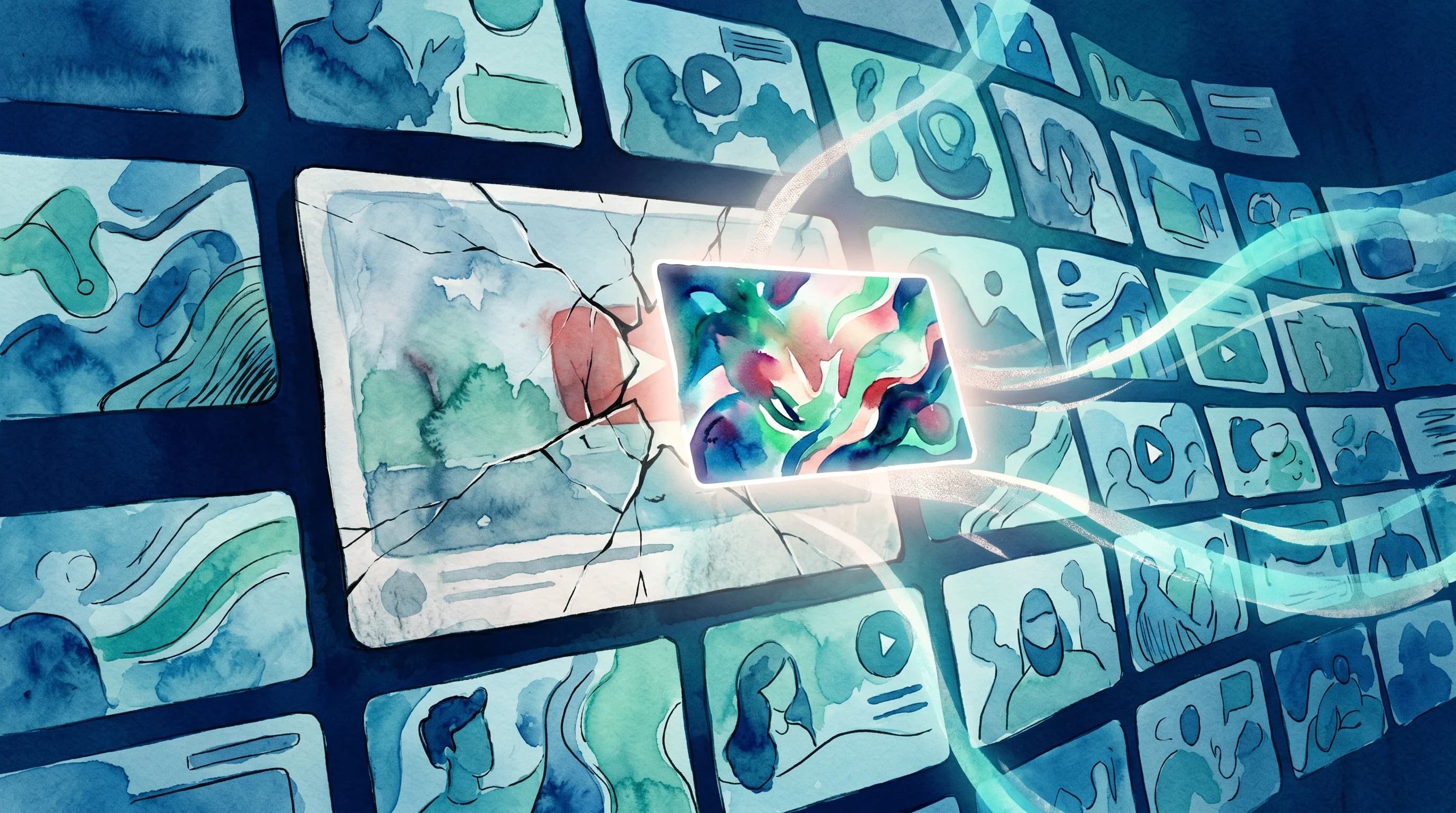
Most creators treat the Community tab as a place to drop a "new video out now 👇" text update once a week. That made sense when posts only reached your subscribers inside a sidebar nobody visited. It does not make sense in 2026.
YouTube spent the last year turning Communities into a real feed. Posts now surface in Home, in Shorts, and in Subscriptions (source). They can reach people who do not subscribe to you. And the format that gets distributed is overwhelmingly visual — which means the image attached to your post is doing the exact same job your thumbnail does: stop the scroll, earn the tap, set an honest expectation. It is a second thumbnail, and almost nobody is treating it like one.
I run an AI thumbnail tool (Hooksnap), so I track every surface where a still image decides whether a creator gets a click. Community Posts quietly became one of the biggest of those surfaces this year. Here is what changed, the data on why visual posts win, and how to design for it.
Quick Answer
In 2026, YouTube Community Posts are no longer a subscriber-only sidebar. The algorithm distributes them across the Home, Shorts, and Subscriptions feeds, so a strong post can reach non-subscribers (source). Posts with a visual element get roughly twice the engagement of text-only posts (source), and channels with active Communities see 15–25% more algorithm recommendations on their videos (source). Practically: treat the post image like a thumbnail. Big legible subject, one idea, readable at feed size, square or 16:9. Text-only posts are leaving reach on the table.
What Actually Changed With YouTube Communities
For years, the Community tab was a low-stakes side room. You posted, your most loyal fans saw it, and that was the end of it. The 2026 version is different on two fronts.
First, distribution. YouTube's algorithm now places Posts into the Home, Shorts, and Subscriptions feeds rather than confining them to your channel page. When a post earns high engagement relative to its initial reach, YouTube can surface it in the Home feed of users who do not subscribe to you but watch content like yours (source). A poll or image that performs well can reach tens of thousands of non-subscribers — the same recommendation machinery that powers video discovery now powers Post discovery.
Second, access. YouTube renamed the "Community" tab to "Posts" and expanded the feature far down the subscriber ladder. Posts are now available to channels with as few as 500 subscribers, letting newer creators use polls, images, and updates to stay visible between uploads (source). The separate "Communities" layer — where subscribers can start their own threads — rolled out to all eligible creators over 2025–2026 and currently lives on the mobile apps (source).
The strategic takeaway from both changes is the same: a Community Post is now a piece of distributed content competing in the feed, not a memo to people who already like you. And in the feed, the image does the heavy lifting.
The Data: Why Visual Posts Beat Text Every Time
This is the part that should change how you post tomorrow.
- Visual posts get ~2x the engagement of text-only posts. Per Think with Google's creator insights, community posts that include a visual element receive roughly twice the engagement of text-only posts (source).
- Polls get 3–4x the interactions of text. A 2025 YouTube engagement study found that poll-based community posts receive three to four times more interactions than text-only posts on average (source). Polls are consistently the highest-engagement format on the surface.
- Active Communities lift your video recommendations. Channels with active communities see 15–25% more algorithm recommendations, because consistent posting signals an engaged audience that YouTube reads as channel relevance (source).
- Image and video posts can push engagement up to 40% higher. Creators who use images and video snippets in their posts see up to 40% higher engagement rates according to YouTube Analytics data (source).
- Posts have a short shelf life, so the image has to land fast. Community posts decay in the feed faster than videos, and YouTube is even testing disappearing posts that expire after 24 or 72 hours (source). You do not get a second impression. The first frame is the whole pitch.
Put those together and the picture is clear. The Community feed rewards the same things the video feed rewards — a clear visual that communicates one idea instantly — but most creators are still typing a sentence and hitting post. That gap is the opportunity.
Why the Post Image Is a Thumbnail, Not a Caption
When you upload a video, you obsess over the thumbnail because you know it is the click decision. When you write a Community Post, the muscle memory says "caption" — words first, maybe an image if you have one lying around. That instinct is backwards for the 2026 feed.
A Post image renders at roughly the same physical size as a thumbnail in the same feed, next to the same competing thumbnails, judged in the same fraction of a second. The viewer is not reading your text before they decide — they are reacting to the image and then maybe reading. So the design rules transfer almost one-to-one:
- One subject, one idea. A face mid-reaction, a single object, a clean before/after. Not a collage of five things.
- Legible at feed size. If there is text in the image, three words or fewer, heavy weight, high contrast. The same word-count rule that governs thumbnails applies here — short text outperforms cluttered text in fast feeds (we broke this down in our thumbnail text guide).
- Honest about the payoff. A misleading Post image burns trust the same way a bait thumbnail does, and YouTube's 2026 satisfaction signals punish the same dishonesty across surfaces (see our satisfaction algorithm breakdown).
- Consistent with your channel look. Your Posts sit next to your thumbnails in a fan's feed. If they share a palette and a face treatment, your channel reads as one brand instead of two. This is the whole argument for a visual brand system.
The creators winning the Community feed are the ones who realized they already know how to do this. They have been designing thumbnails for years. They just had not pointed that skill at the Post image yet.
Community Post Image Specs (Get the Format Right)
The fastest way to lose the feed is to upload an image at the wrong proportions and let YouTube crop your subject's head off. Here is what to ship in 2026:
- Aspect ratio: Square (1:1) or landscape (16:9) are the safe choices. YouTube accepts aspect ratios between 2:5 and 5:2, but extreme ratios get awkward feed crops (source).
- Resolution: Up to 1280×1280 px for square, or 1920×1080 px for 16:9. Bigger source files survive YouTube's compression better.
- Format: JPG or PNG for stills; GIFs are supported up to 16 MB.
- Display behavior: The feed shows a cropped preview and reveals the full image on tap — so keep your subject and any text inside the center-safe zone, exactly like the safe-zone rules for thumbnails.
If you only remember one thing: design the Post image to read at a glance in the cropped preview, then let the full image reward the tap.
A Repeatable Community Post System
You do not need to post daily. Spamming the feed actually suppresses your posts and can trigger a temporary restriction (source). Two to three strong, visual posts per week beats a flood of text. Here is a rotation that keeps the surface working without becoming a second full-time job:
- The poll (audience research + reach). Polls are the highest-engagement format. Pair the poll with a relevant image, not plain text, and you stack the visual bonus on top of the poll bonus. Use it to decide your next video — "Which build should I cover next?" — and you get free topic validation plus a reach spike.
- The teaser (video runway). Two days before an upload, post the thumbnail concept or a single frame from the video with a one-line hook. This warms the audience and gives the eventual video a head start on engagement velocity.
- The behind-the-scenes still (loyalty + honesty). A real, un-staged frame from your process. This is where authenticity beats polish — the same trend pulling thumbnails away from over-produced AI looks applies to Posts (source).
The throughline across all three is the image. A poll without a visual underperforms a poll with one. A teaser is only as good as the frame you choose. Pick the wrong still and the post dies in the feed regardless of how good your copy is.
Where Hooksnap Fits
The reason most creators ship text-only posts is not laziness — it is friction. Designing a second on-brand image every few days, on top of your thumbnail, on top of editing, is a real tax. That tax is exactly what we built Hooksnap to remove.
Hooksnap generates click-ready, on-brand images from your video and your channel's own visual style, so the Post image and the thumbnail come from the same engine and look like the same channel. You can generate a square or 16:9 variant for a Community Post in the same flow you use for the thumbnail, test a couple of options, and pick the one that reads cleanest at feed size — no Photoshop, no designer, no extra hour. If you are a creator trying to keep every surface visual without burning out, that is the whole pitch for creators, and you can see what the plans cost.
FAQ
Are YouTube Community Posts and Communities the same thing?
Not exactly. "Posts" is the creator-publishing feature (text, image, poll, video share) that now lives in the Posts tab and gets distributed across feeds. "Communities" is the layer where your subscribers can start their own posts and conversations on your channel, currently on the mobile apps. The visual playbook in this post applies to the creator Posts you publish.
Do Community Posts really reach people who don't subscribe to me?
Yes. When a post earns strong engagement relative to its initial reach, YouTube can surface it in the Home feed of non-subscribers who watch similar content (source). High-performing posts behave like distributed content, not subscriber memos.
How often should I post?
Two to three visual posts per week is the sweet spot for most channels. One to two per day is the upper limit; beyond that, YouTube de-prioritizes your posts and may temporarily restrict the feature (source).
What's the single biggest mistake creators make with Community Posts?
Posting text-only. Visual posts get roughly twice the engagement of text-only ones (source), and the feed judges the image first. Treat the post image like a thumbnail and you fix the most common failure in one move.
Do I need a big channel to use this?
No. Posts are available to channels with as few as 500 subscribers in 2026 (source), which means small creators can use the surface to stay visible and reach new viewers before they have a large subscriber base.
The Takeaway
YouTube changed where Community Posts live, and most creators have not updated how they post. The feed now judges your Post image the same way it judges your thumbnail — instantly, visually, against neighbors. The data is one-directional: visual beats text, polls beat plain updates, and consistent posting lifts your whole channel's recommendations. You already have the skill to win this surface. You just have to point your thumbnail brain at the second thumbnail nobody else is designing yet.
See how Hooksnap creates click-worthy thumbnails
AI-powered thumbnail generation that helps your YouTube videos get more clicks.
View PlansRelated Articles
YouTube Killed the Subscriber Bell: Thumbnail Strategy 2026
YouTube made bell-notification filtering permanent in April 2026. Inactive subscribers no longer get push alerts. Your thumbnail is the new subscriber reach.

YouTube Impressions: How the Algorithm Decides Who Sees Your Thumbnail
Your thumbnail can't get clicks if nobody sees it. Here's how YouTube's impression system works in 2026 and what triggers the algorithm to expand distribution.
YouTube Thumbnails That Stop the Scroll: The 1.5-Second Framework
YouTube now counts impressions only after 1.5 seconds of visibility. Here is a practical framework for thumbnails that stop the scroll and earn the click.
Related Tools
Ready to boost your CTR?
Stop losing clicks to boring thumbnails. Get AI-generated thumbnails in under 60 seconds.
Get Started Free