Why YouTube's Built-In A/B Test Is Too Late (2026)
YouTube's native A/B test takes two weeks to pick a winner. But the algorithm caps your reach in 24-48 hours. Here's why it's a post-mortem, and the fix.
In 2026, YouTube finally gave every creator the feature they'd been begging for: native A/B testing for titles and thumbnails, rolled out globally to anyone with advanced features enabled. You can now test up to three title-and-thumbnail combinations on a single video and let YouTube crown the winner.
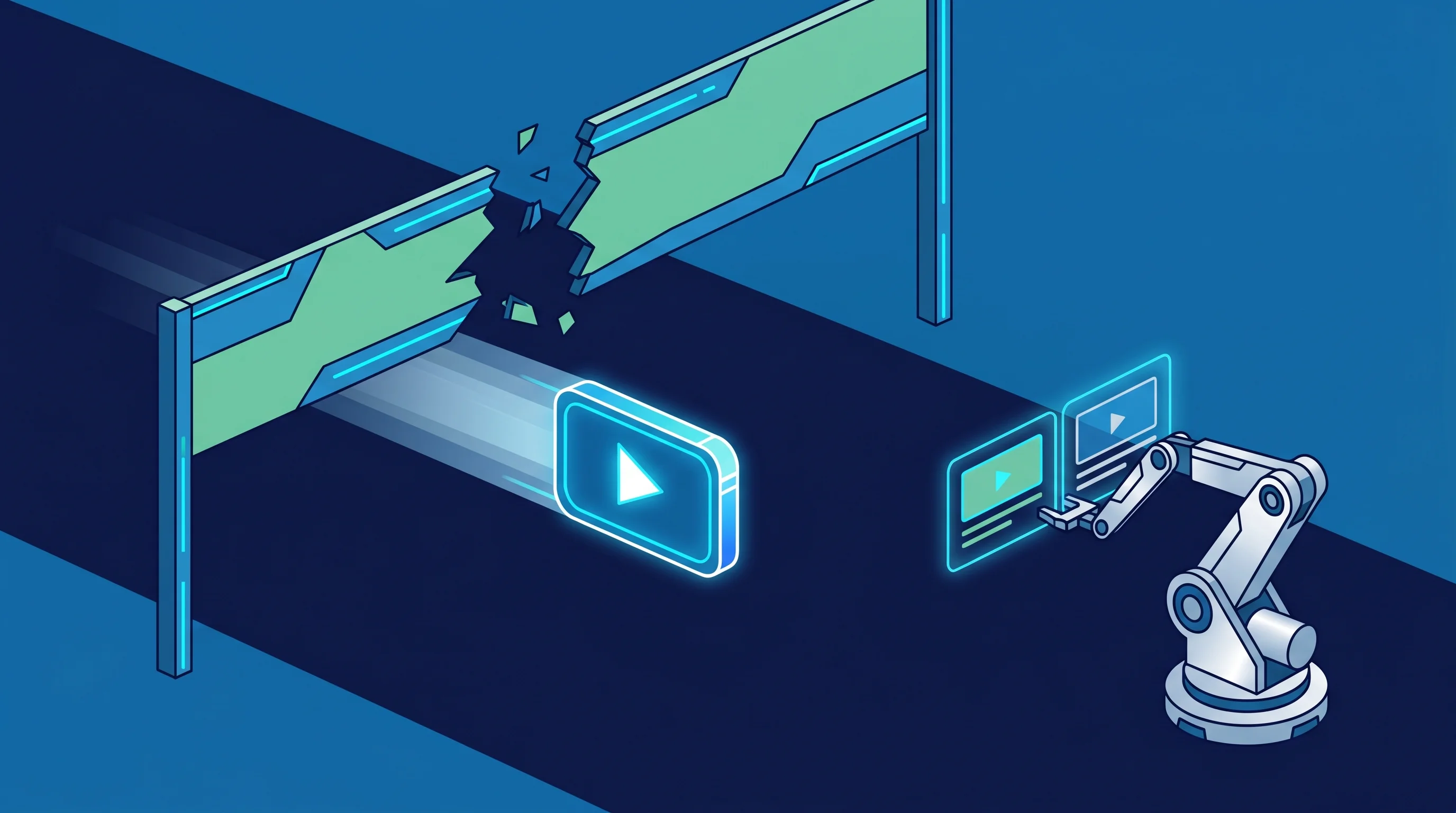
It sounds like the answer to packaging. It isn't — at least not the way most creators are using it. The native test has a timing problem that almost no one talks about, and once you see it, you can't unsee it: by the time the test declares a winner, the algorithm has already decided how far your video will go. The test runs for up to two weeks. The distribution decision is made in the first two days.
That gap is the whole story. Let me walk through why the built-in A/B test is structurally a post-mortem, and where the real edge actually sits.
How the native test actually picks a winner
First, give credit where it's due. The 2026 version of Test & Compare is a genuine upgrade. You can test titles, thumbnails, or combinations, and crucially, the winner is decided by watch-time share, not clicks. That matches YouTube's broader 2026 shift toward satisfaction over raw watch time — a good package should attract the click and deliver on the promise, not just bait the tap.
The mechanics matter, though. The test shows your variants to different slices of your audience and waits until one option earns a statistically meaningful share of watch time. YouTube is explicit that tests can end in three states: a clear winner, "performed the same," or "inconclusive." And inconclusive happens when a video doesn't generate enough impressions for a reliable comparison.
That word — impressions — is where the whole thing falls apart for most creators.
The math nobody mentions: you need 10,000+ impressions
Statistical significance is not free. To split your traffic across three variants and detect a real difference, each variant needs enough exposure to rule out noise. The numbers that float around the testing community are sobering:
- Most tests need at least 1,000 impressions before any pattern is even visible.
- For robust confidence, Test & Compare typically needs 10,000+ impressions, which takes one to two weeks on an average channel.
- YouTube states plainly that if your video generates fewer than 1,000 impressions per week, the test returns "Inconclusive."
- For small channels, a test can run for weeks or even months without reaching significance — at which point the standard advice is to just cancel it and move on.
Now think about who that excludes. The creators who most need to optimize their packaging — the ones under 10,000 subscribers fighting for every impression — are precisely the ones whose videos can't accumulate the impression volume to produce a winner. The native test works best for channels that already have the reach. It's a tool that rewards the already-winning.
The fatal timing mismatch
Even if you have the reach, there's a deeper problem, and it's about when the distribution decision gets made.
YouTube doesn't slowly evaluate your video over two weeks and then decide how to distribute it. It front-loads that decision hard. When you publish, the platform runs an initial impression test: it seeds the video to your most engaged subscribers and a small slice of likely-interested non-subscribers, then watches how that sample responds. The phases are tight — initial seeding in the first couple of hours, signal collection over the next several, and an expansion-or-suppression call between 12 and 48 hours.
The estimates creators throw around are stark: your first 24 to 36 hours determine roughly 70 percent of a video's lifetime performance. If the early signals — CTR, retention, satisfaction — beat expectations, impressions scale exponentially. If they miss, distribution quietly tapers and never recovers at scale.
Here's the collision. The algorithm makes its big call inside 48 hours. The native A/B test takes one to two weeks to find a winner. So the test is using up your most valuable impressions — the early-window impressions that set the trajectory — to gather data you won't be able to act on until after the trajectory is already locked.
You're not optimizing the package that gets seeded. You're running a science experiment on the wreckage.
Get the package right before you publish
Hooksnap generates clickable title-and-thumbnail options before your video goes live, so the version YouTube seeds is already your strongest one. No two-week wait.
Try it free"Performed the same" is not a victory
There's a subtler trap inside the native test, too. A lot of creators run it, get a "performed the same" result, and conclude their packaging is fine. It isn't a verdict on quality — it just means all three of your variants earned similar watch-time shares within the noise.
If you tested three near-identical thumbnails — same crop, same color, slightly different text — of course they performed the same. You learned nothing because you bet nothing. Meaningful A/B testing requires genuinely different concepts: a curiosity angle versus a transformation angle versus a bold-claim angle. Most creators don't do that inside the native tool because producing three truly distinct, finished thumbnails is expensive. So they nudge one design three ways, get "performed the same," and move on with false confidence.
The native test will faithfully tell you that three flavors of the same mediocre package are equally mediocre. That's not the insight you need.
What a 4-5% CTR baseline really demands
Step back and look at the odds you're playing against. Platform-wide organic CTR sits at roughly 4 to 5 percent in 2026, with 6 to 10 percent considered excellent and double digits reserved for viral territory. And CTR is now only half the equation — YouTube evaluates what happens in the 30 seconds after the click, a "quality CTR" concept that punishes packages that overpromise.
So the package that gets seeded in your first 48 hours has to clear two bars at once: earn the click against a 95-in-100 scroll-past rate, and hold the viewer once they arrive. That's a hard target to hit on the first try. The native A/B test acknowledges the target exists but gives you no way to aim before you fire. It just measures where the shot landed.
The real edge isn't in measuring after publish. It's in raising the odds that the first package — the one that goes into the seeding window — is already your best one.
The fix: validate the package before you publish
This is the same inversion the best creators already made for video ideas. The smart move isn't to publish and then test; it's to test the package against itself before it ever competes in the feed. We laid out the full workflow in our guide to testing a video idea before you film, and the same logic applies at publish time even if you've already shot the video.
The process is short:
- Produce 3-5 genuinely different packages. Not three crops of one idea — three distinct hooks. Different focal point, different emotional angle, different promise.
- View them cold at mobile-feed size. Most thumbnails that look sharp at full resolution collapse into mush at roughly 120px, which is where the click actually happens. Judge the package where it competes.
- Pick the one that survives both tests — readable at feed size, and compelling enough that you, who already knows the video, still want to click.
- Publish that one as your opener. Now the algorithm seeds your strongest package during the window that actually decides your reach.
The native A/B test then becomes a useful second tool, not your primary one. Use it to confirm or marginally improve a package you've already pre-validated — not to discover, two weeks late, that the package you seeded was the weak one.
Why this was impossible until recently
The honest reason most creators don't pre-validate is the same reason they used to film before packaging: producing three finished, distinct thumbnails on demand was slow and expensive. An hour in Photoshop per variant, three variants, and you've burned an afternoon before you know if the idea is even worth seeding well. So people defaulted to one rushed thumbnail and hoped the native test would bail them out later.
That cost has collapsed. AI generation now produces several clickable title-and-thumbnail combinations in under a minute — you can describe the video or paste your channel so the tool matches your existing visual style. The pre-validation step that was theoretically obvious but practically impossible is now just fast.
I built Hooksnap around exactly this shift. The point isn't to replace YouTube's A/B test — it's to make sure the package you feed into the seeding window is your best one, so the native test has something good to confirm instead of a mistake to diagnose. The creators landing page walks through how the idea-first flow runs end to end. If you want to see where generation fits alongside keyword and analytics tools, our comparisons of Hooksnap vs VidIQ and Hooksnap vs TubeBuddy lay out the difference: those tools tell you what to make; the validation step tells you whether the package will get clicked. They're complements.
Where the native test still earns its place
None of this means you should ignore Test & Compare. It's genuinely valuable in two situations. First, on established channels with high impression volume, where a video can clear 10,000 impressions fast enough that the winner is found before the trajectory fully closes — there, marginal lift is real money. Second, on evergreen and search-driven content, which accumulates impressions slowly over weeks and months rather than living or dying in the first 48 hours. For a tutorial that pulls steady search traffic, a two-week test maps reasonably well to how the video actually earns views.
For everything that lives in the browse feed — which is most content, for most creators — the seeding window is the game, and you win it by publishing the right package, not by testing your way to it afterward.
The takeaway
YouTube's native A/B test is a measurement tool wearing a decision tool's clothes. It tells you, accurately and two weeks late, which package would have performed better in a window that's already closed. For the creators who need optimization most, it often tells you nothing at all because the impressions never arrive.
The actual lever is upstream. Produce a few real package options, judge them at feed size before you publish, and seed your strongest one into the 48-hour window that decides your reach. Then, if you have the volume, let Test & Compare confirm it. Get the order right and the native test goes from a post-mortem to a victory lap.
FAQ
Why is my YouTube A/B test inconclusive? An inconclusive result almost always means your video didn't generate enough impressions for a reliable comparison. YouTube needs roughly 1,000 impressions before any pattern emerges and closer to 10,000 for real statistical confidence. If your video earns fewer than about 1,000 impressions per week, the native test will likely return "inconclusive" no matter how long it runs. Small channels can wait weeks or months without ever reaching significance.
Does YouTube's A/B test pick a winner by clicks or watch time? By watch-time share, not raw clicks. This reflects YouTube's 2026 emphasis on satisfaction — the winning package is the one that earns the click and keeps viewers watching, not the one that simply baits the most taps. A thumbnail that gets clicks but breaks its promise will lose the test because retention drags its watch-time share down.
If the native test is too slow, why use it at all? Because the algorithm makes its main distribution decision in the first 24-48 hours, while the native test takes one to two weeks to declare a winner. By then your reach is largely set. The test is most useful on high-volume channels (which hit significance quickly) and on evergreen or search-driven videos (which accumulate impressions slowly anyway). For typical browse-fed content, pre-publish validation matters more.
How do I validate a thumbnail before publishing? Produce 3-5 genuinely different packages — distinct hooks, not three crops of one idea — and view each one cold at mobile-feed size (around 120px wide). Pick the one that stays readable and still makes you want to click despite already knowing the video. Publish that one as your opener so the algorithm seeds your strongest package during the window that decides your reach. AI tools make producing the test packages a 60-second step.
Should small channels bother with the native A/B test? Usually not as a primary tool. Channels under ~10,000 subscribers often can't accumulate the impressions to reach a conclusive result, so the test ties up their best early impressions for data they can't act on in time. The higher-value move for small channels is getting the first package right before publishing, then revisiting native testing once impression volume grows.
See how Hooksnap creates click-worthy thumbnails
AI-powered thumbnail generation that helps your YouTube videos get more clicks.
View PlansRelated Articles
How to Test a YouTube Video Idea Before You Film (2026)
Top creators design the thumbnail and title before they hit record. Here's the package-first workflow to kill weak ideas before you waste 8 hours.
YouTube Thumbnail A/B Testing: A Complete Guide for 2026
YouTube now lets creators test 3 thumbnail variants ranked by watch time. Here is how to run A/B tests that improve your CTR.
YouTube Impressions: How the Algorithm Decides Who Sees Your Thumbnail
Your thumbnail can't get clicks if nobody sees it. Here's how YouTube's impression system works in 2026 and what triggers the algorithm to expand distribution.
Related Tools
Ready to boost your CTR?
Stop losing clicks to boring thumbnails. Get AI-generated thumbnails in under 60 seconds.
Get Started Free