Hooksnap vs Fotor for YouTube Thumbnails: An Honest Comparison (2026)
Fotor is a photo editor with thumbnail templates. Hooksnap generates thumbnails from your actual video. Where each tool wins, where it falls short, and what the data says.
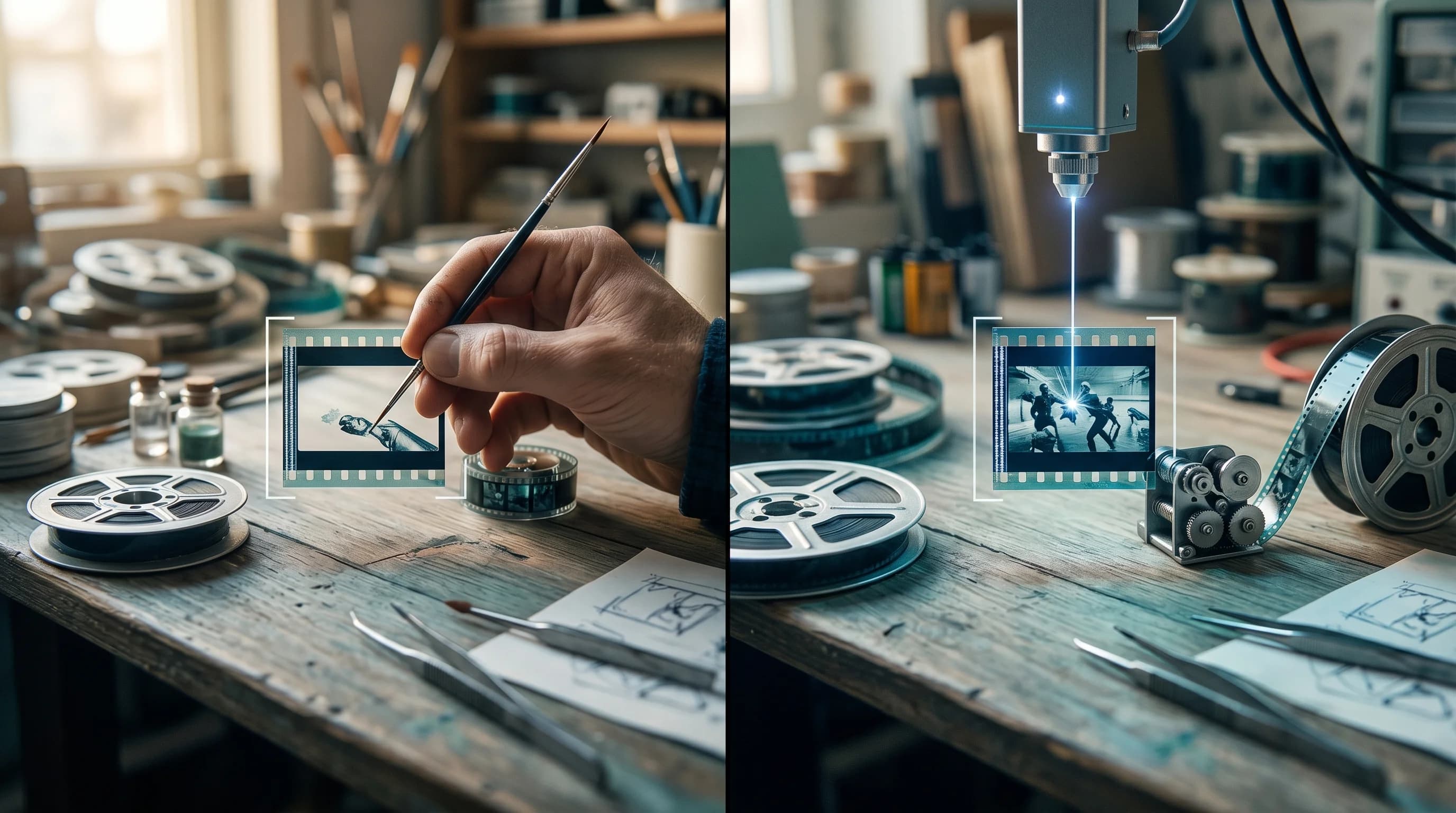
I built Hooksnap, so this comparison comes with an obvious bias. You should read it that way.
That said, I have spent the last year studying every thumbnail tool small and mid-sized YouTubers actually pay for, and Fotor keeps coming up — especially among creators who already use it as a photo editor and want the thumbnail workflow to live inside the same tool. It is cheap, it has been adding AI features quickly, and the portrait-editing tooling is genuinely strong.
So let me try to do this honestly. Fotor is a perfectly reasonable choice for a specific kind of creator. It is also not the right tool for every YouTube creator. The question is which group you fall into.
Quick Answer
Fotor is an online photo editor with AI enhancement, background removal, and a library of YouTube thumbnail templates baked in. Its Pro plan starts at $8.99 per month, and the AI image generation is metered by credits that are shared across all of its features. Best for creators who already do significant photo editing and want a single tool that covers retouching, headshots, and template-driven thumbnail design.
Hooksnap is a dedicated AI thumbnail generator that analyzes your actual video — frames, transcript, topic, emotional peaks — and produces branded thumbnails in under 60 seconds. Best for creators who publish regularly, want video-aware AI generation, and need built-in A/B testing.
If you are primarily editing photos and treat thumbnails as one output among many, stick with Fotor. If you publish weekly or more and want thumbnails generated from your actual video content without manual layout work, Hooksnap is the faster path. For a full feature matrix, see the Hooksnap vs Fotor comparison page.
What Each Tool Is Actually Built For
Most tool comparisons get this part wrong. They list features side-by-side as if both products are solving the same problem. They are not.
Fotor is, at its core, an online photo editor. The roadmap reflects that — portrait enhancement with skin smoothing and lighting, AI background removal, object removal, photo effects, collage tools, and a library of 500+ templates spanning everything from posters to social posts to thumbnails. YouTube thumbnail creation is one job among many, and it is built on top of the photo-editing chassis. According to a 2026 Fotor review on toolsforhumans.ai, the tool's strength is "taking existing images and making them thumbnail-ready" — not generating thumbnails from scratch.
Hooksnap does one thing: generate YouTube thumbnails from your actual video content. You paste a YouTube URL, the system analyzes the video — frames, transcript, topic, emotional peaks — and generates thumbnails using your brand template. No collages. No headshot retouching. No general-purpose photo editing. Just thumbnails built from your video.
That difference in scope drives almost every comparison point that follows.
Where Fotor Wins
I want to start here because it matters.
Portrait and Photo Editing Is Genuinely Strong
If you are a creator who films yourself and wants to retouch your face shots before they go into a thumbnail, Fotor is a real workhorse. The AI portrait enhancement, skin smoothing, lighting correction, and background removal are some of the cleanest implementations in the consumer photo-editing market. Several 2026 reviews note that Fotor excels at "headshot prep" in a way Canva does not. If your thumbnail workflow starts with raw photography and ends with a polished portrait, Fotor compresses several steps into one tool.
Aggressive Pricing
Fotor Pro is $8.99 per month or roughly $3.33 per month on annual billing. For pure photo editing plus thumbnail templates, that is one of the cheapest legitimate options on the market. It undercuts Canva Pro ($12.99/month) and matches Hooksnap Starter ($9/month) — though the two tools spend that budget on very different capabilities.
Multi-Format Output
Fotor was built for general visual content. Posters, social posts, blog headers, collages, and thumbnails all live inside the same editor. For creators who cross-post to Instagram, TikTok, Pinterest, or LinkedIn alongside YouTube, that single-tool coverage is a real workflow advantage. Hooksnap does not address any of those formats.
A Functional Free Tier (with Real Caveats)
The free plan exists and is workable for evaluation — you can edit photos, use a subset of templates, and try the AI features. But you should know what you are getting. According to a 2026 Fotor pricing breakdown, the Free plan limits you to one AI enhancement per day, background removal as preview-only, and a Fotor watermark on every export. For most creator workflows, that is enough to evaluate the tool, not enough to actually publish with.
Where Fotor Falls Short for YouTube-Specific Work
Here is where the honest part of this comparison gets uncomfortable.
The AI Does Not Know What Your Video Is About
This is the core architectural limitation that no amount of feature development will fix without restructuring the product.
Fotor's AI generation is prompt-based. You describe what you want — "a YouTube thumbnail with a gaming setup and the text WORLD RECORD" — and the model produces an image. That is useful for creating background elements or conceptual visuals. It is not useful for translating your specific 12-minute video into a thumbnail that represents what that video is actually about.
The decisions that separate high-CTR thumbnails from low-CTR ones — which frame from the footage stops the scroll, which emotional beat to feature, what text creates an honest curiosity gap, how the thumbnail pairs with the title — require knowledge of the video. Fotor has no access to any of that. You do, and you have to translate it into a prompt and a design manually.
For creators publishing one video per week, that translation work takes 20-45 minutes per thumbnail according to multiple 2026 thumbnail-tool surveys. For channels publishing 3 or more videos per week, that time adds up to dozens of hours per year.
The Credit System Is Shared and Easy to Exhaust
Fotor's AI features are gated by credits. The Pro+ plan, which is the realistic tier if you actually rely on AI generation, includes 200 AI image credits per month at up to 2048x2048 resolution. Those credits are shared across all AI features — background removal, image enhancement, object removal, and AI generation.
That sounds fine until you actually use the tool. A single thumbnail pass might burn through a background-removal credit, an enhancement credit, and one or two generation credits — and if you want variations to A/B test, multiply that out. Several user reports cite "credit-based restrictions" as a real frustration when working on volume. For a creator producing 12-16 thumbnails per month with revisions and variants, the credit ceiling is closer than the headline 200/month number suggests.
For comparison, Hooksnap's credits are dedicated to thumbnail generation. One credit equals one full thumbnail batch from a video analysis — the planner, the multiple variants, the brand application. No credits are siphoned off for background removal or photo retouching.
Template Saturation Applies Here Too
Fotor's 500+ templates are a much smaller library than Canva's tens of thousands, but it is still a template-first approach for thumbnails. As I wrote in the Canva comparison, viewers spend hours per day on YouTube and develop pattern recognition for template-based designs. A thumbnail that looks like a template — Fotor's or anyone else's — increasingly signals "someone picked a layout and changed the text" rather than "this creator made something specific."
The 2026 data backs this up. AI-generated thumbnails can boost CTR by around 23% on average compared to generic alternatives, but the gains are concentrated in tools that actually work from the source content. Template-based AI underperforms video-aware AI in head-to-head tests.
Watermarks on the Free Tier Make It Unusable for Real Publishing
I want to call this out specifically because new creators get burned by it. Fotor's free plan applies a Fotor watermark on every export. That means the "try before you pay" path requires either accepting a watermark on your live YouTube thumbnails, or upgrading immediately to evaluate the actual paid experience.
Hooksnap's free tier gives you 10 watermark-free thumbnail generations per month, which is enough for a 2-3 video-per-month cadence without paying. The economics around "evaluate the tool with real published work" are different.
Where Hooksnap Wins
Video-Aware Generation
The core difference is that Hooksnap starts with your content. Paste any YouTube URL — published or unlisted — and the system analyzes the actual video. It extracts key frames, reads the transcript, identifies emotionally compelling moments, and understands the topic well enough to generate thumbnails that represent what the video is actually about.
This matters for CTR because relevance matters. A thumbnail that misrepresents the video creates clicks but tanks watch time, which destroys your algorithmic standing. Fotor cannot help with this because Fotor has no access to your video. You have to translate the video into a prompt or a layout manually.
The 2026 CTR data from miraflow.ai is blunt about it: "90% of the best-performing YouTube videos use custom thumbnails, and videos with optimized thumbnails see click-through rates improve by 30-154%." The gap between a template-based design and a video-aware design is real and measurable.
Brand Consistency at Speed
Hooksnap applies your brand template — fonts, colors, logo placement, text zones — automatically to every thumbnail it generates. You set up the brand once. Every output reflects it.
Fotor's templates expect you to apply your brand manually to each new design. The photo editor saves you from re-uploading the logo, but it does not save you from making layout decisions or matching brand colors across a year of uploads.
A useful gut-check before publishing: run your thumbnail through the Hooksnap Thumbnail Checker to see how it scales on mobile, where over 70% of YouTube watch time happens. Most template-based tools optimize for the desktop 1280x720 view and look completely different at 200x113 mobile scale.
Built-In A/B Testing
Hooksnap generates multiple thumbnail variants per video by default. You get three options from a single analysis, each with a different visual approach, and you can test them directly using YouTube Studio's A/B testing feature.
According to YouTube Studio A/B testing data, creators who systematically test thumbnails see an average 20% CTR lift. With Fotor, generating three distinct variants means designing three thumbnails manually — burning credits, time, and creative bandwidth. With Hooksnap, three variants happen automatically from a single video analysis.
Time Cost Math
AI thumbnail generation typically takes 8-12 minutes end-to-end when including review and edits, compared to 30-60 minutes for manual template-based design. For a creator publishing one video per week, that is roughly 35 hours of thumbnail production time per year saved — and the savings scale linearly with upload frequency.
For creators publishing 3 or more videos per week, the gap turns into more than 100 hours per year.
See what AI generates from your actual video.
Paste any YouTube URL and get AI-branded thumbnails in under 60 seconds. No templates. No prompts. Just thumbnails built from your content.
Try Hooksnap FreePricing Reality Check
Fotor pricing (2026):
- Free: limited templates, 1 AI enhancement per day, background removal preview, Fotor watermark on every export
- Pro: $8.99/month — full photo editor, removes watermark
- Pro+: $7.49/month annual ($19.99/month monthly) — 200 AI image generation credits per month (shared across all AI features)
Hooksnap pricing:
- Free: 10 thumbnail generations per month, no watermark
- Starter: $9/month with A/B testing, batch generation, and thumbnail scoring included
For a creator who genuinely uses photo editing as part of their workflow, Fotor Pro+ at $7.49/month (annual) is a compelling all-in-one. For a creator whose primary need is YouTube thumbnails specifically, Hooksnap Starter at $9/month is the better-targeted spend — every credit goes to thumbnails, not split across photo editor features the creator does not use.
The math sharpens if you actually need both: a year of Hooksnap Starter ($108) plus Fotor Free (for occasional photo touch-ups) covers most weekly-upload creator workflows, and you avoid double-paying for overlapping features.
The Hybrid Workflow
Many creators end up using both tools for different purposes, and this is often the right answer.
Use Fotor for:
- Headshot retouching and portrait enhancement before the thumbnail step
- Photo editing for non-YouTube channels (blog headers, social media graphics)
- Background removal on stock product photos
- Quick one-off designs where you have a specific photo to dress up
Use Hooksnap for:
- Weekly YouTube thumbnails generated from your actual video content
- High-volume production periods where manual design becomes the bottleneck
- Automatic A/B test variants from a single video analysis
- Thumbnails that need to consistently reflect your brand template
The tools are not mutually exclusive. The cleanest workflow is Hooksnap for the thumbnail itself, with Fotor as the photo prep tool when you need a portrait or product shot polished before you upload it as a reference image.
What the 2026 Performance Data Shows
A 2026 comparative analysis of AI versus manually designed thumbnails from ThumbMagic found that well-designed AI thumbnails can match or exceed manual designs in CTR — provided the AI is working from real video context rather than generic prompts. The same study found that AI variants outperformed manual designs in 73% of cases for gaming content, with the gap smaller but still favoring AI variants in more than half of head-to-head tests for general content.
The pattern behind the results matters. AI thumbnails underperformed when they lacked the specific micro-expressions, genuine reactions, and real moments from footage that viewers recognize as authentic. They outperformed when the AI was working from actual video context rather than text descriptions.
This is why video-aware generation matters. A tool that analyzes your footage and identifies genuine emotional peaks in your content produces different outputs than a tool that generates images from prompts and templates. The former has access to authentic source material. The latter is imagining what your content might look like.
For creators under 1,000 subscribers, a CTR of 6-10% is common because traffic is subscriber-heavy. For mid-sized channels, dipping consistently below 3% indicates a thumbnail optimization opportunity. The tool that gets you to systematic A/B testing fastest tends to win the optimization race.
The Honest Bottom Line
Choose Fotor if:
- You already use Fotor for photo editing and want thumbnails in the same tool
- You publish fewer than 2 videos per month and have time to design
- Portrait retouching and background removal are core to your thumbnail workflow
- You produce visual content beyond YouTube (blogs, social, posters)
Choose Hooksnap if:
- You publish weekly or more and need to maintain production speed
- You want thumbnails built from your actual video content
- You are currently spending 20+ minutes per thumbnail in another tool
- You want A/B testing built into the workflow without extra production overhead
Use both if:
- You need photo-editing capabilities (Fotor) alongside AI-generated YouTube thumbnails (Hooksnap)
- Your workflow starts with raw photography that needs polish before becoming a thumbnail
Neither tool is universal. Fotor is a strong, affordable photo editor that has added thumbnail templates on top. Hooksnap solves a narrower problem more deeply by generating thumbnails from your actual video. Understanding which problem you actually have determines which tool you need.
For a fuller side-by-side, see the Hooksnap vs Fotor comparison page with the complete feature matrix and pricing breakdown.
FAQ
Is Fotor good for YouTube thumbnails in 2026? Fotor is good for creators who already use it as a photo editor and want thumbnail creation in the same tool. It is template-first with prompt-based AI generation — not video-aware. If thumbnails are your primary use case and you publish weekly or more, a dedicated AI thumbnail generator like Hooksnap is the better-targeted spend.
Does Fotor have AI thumbnail generation? Yes, but it is prompt-based. You describe the thumbnail you want and the AI generates an image, similar to Midjourney or DALL-E. It does not analyze your video to inform the design. Hooksnap, by contrast, takes a YouTube URL and generates thumbnails using actual frames, transcript, and topic from the video.
How much does Fotor cost compared to Hooksnap? Fotor Pro is $8.99 per month and Pro+ is $7.49 per month on annual billing (200 AI image credits shared across all AI features). Hooksnap Starter is $9 per month and includes A/B testing, batch generation, and thumbnail scoring focused entirely on YouTube thumbnails. Fotor's free plan applies a Fotor watermark on every export; Hooksnap's free tier allows 10 watermark-free thumbnail generations per month.
What is the best Fotor alternative for AI YouTube thumbnails? Hooksnap is the dedicated AI alternative for YouTube thumbnails specifically. It generates thumbnails from your actual video content (frames, transcript, topic), applies your brand template automatically, and includes A/B testing and thumbnail scoring out of the box. Canva and Adobe Express are general-purpose alternatives if you need broader design capabilities.
Does Fotor put a watermark on free thumbnails? Yes. Fotor's Free plan adds a Fotor watermark on every export, making it unsuitable for publishing actual YouTube thumbnails without upgrading to Pro. Hooksnap's free tier includes 10 watermark-free thumbnail generations per month.
Can Fotor generate multiple thumbnail variants for A/B testing? Yes, you can generate multiple thumbnails manually by running the AI generation more than once or duplicating templates with different edits — but each pass consumes AI credits from the same shared pool. Hooksnap generates three variants per video analysis automatically as part of one credit, designed for direct use in YouTube Studio's A/B testing feature.
Dan Kim is the founder of Hooksnap, an AI YouTube thumbnail generator that analyzes your video and generates branded thumbnails in under 60 seconds. He has spent the past year studying what makes thumbnails work — and where most creator tools fall short.
Want to see how Hooksnap handles your channel? Start with a free video analysis — no credit card, no commitment. Or compare how Hooksnap stacks up against other tools in our full comparison guide.
See how Hooksnap creates click-worthy thumbnails
AI-powered thumbnail generation that helps your YouTube videos get more clicks.
View PlansRelated Articles
Hooksnap vs Canva for YouTube Thumbnails: An Honest Comparison (2026)
Canva is great for general design. Is it the right thumbnail tool for YouTubers? Where each tool wins, where it falls short, and what the data says.

Hooksnap vs Snappa for YouTube Thumbnails: An Honest Comparison (2026)
Snappa is built for speed and simplicity. Hooksnap generates thumbnails from your actual video. Where each tool wins, where it falls short, and what the data says.
Hooksnap vs Adobe Express for YouTube Thumbnails (2026)
Adobe Express has Firefly AI and a free tier. Hooksnap generates thumbnails from your video. Where each tool wins and what the 2026 data says.
Related Tools
Ready to boost your CTR?
Stop losing clicks to boring thumbnails. Get AI-generated thumbnails in under 60 seconds.
Get Started Free