Stop Relying on One Revenue Stream: The Creator Monetization Stack for 2026
YouTube ad revenue isn't enough. Learn how top creators build stable, sustainable income through a diversified monetization stack in 2026.

You've been told to focus on views. More views = more ad revenue. Simple math.
Except it's not working anymore.
The average YouTube CPM has grown to $6.15, yes—up from $4.82 last year. That sounds great. But for channels making less than $500/month, those extra few cents per thousand views don't move the needle. And with organic reach collapsing across every platform, views themselves are harder to get.
Here's what's actually happening: creators who make real money in 2026 aren't chasing ad revenue. They're building what the top earners call a Monetization Stack—a portfolio of 3-4 income sources that work together.
Creators earning over $10K/month now get 41% of their revenue from non-ad sources. Up from 31% just a year ago.
That's the shift you need to understand.
The Problem: Ad Revenue Alone Is a Trap
Let's be direct. Relying on YouTube ad revenue as your primary income source has gotten harder:
- Organic reach is declining. Platform competition is fierce, and algorithm volatility means last month's views don't predict this month's income.
- CPM varies wildly by geography and niche. Gaming creators see $9.20 CPM, while lifestyle creators might see $3.60. That's a 2.5x difference for the same amount of effort.
- Ad revenue is unpredictable. Seasonality, brand safety policies, and platform changes mean revenue swings month to month.
Top creators realized this years ago. They stopped viewing YouTube as a single-revenue platform and started thinking of it as a platform with multiple income layers.
The Monetization Stack: What Works in 2026
A monetization stack isn't complicated—it's just intentional diversification. The best-performing creators use this basic structure:
Layer 1: Ad Revenue (Base) YouTube ad revenue is your foundation, but it's not your revenue driver anymore. For most channels, ads are 50-60% of total income.
Layer 2: Membership & Patronage (+45% growth in 2026) Super Chat and Super Stickers are exploding. In 2026, these features grew 45% year-over-year. Gaming and educational channels see the highest conversion rates. Why? Because your most engaged viewers want to support you directly, and they'll pay for recognition.
Layer 3: Commerce (Merch + Affiliate, +52% growth in 2026) YouTube Shopping and merch shelf integrations grew 52% this year. Creators are selling an average of 180 items monthly. This works because you're selling to your audience, not past them. The best creators solve problems their audience already has.
Layer 4: Brand Partnerships Once your audience is established and your engagement is proven, brands come to you. But don't wait for brands to find you—build relationships with companies that make sense for your niche.
The Strategy: Making Your Shorts Feed YouTube Long-Form
Here's the surprising part: YouTube Shorts don't make money well. But they do something more valuable—they drive viewers to where money is made.
78% of YouTube revenue now comes from long-form content.
Creators are using this workflow:
- Create Shorts as a funnel mechanism. Shorts have no barrier to entry and benefit from YouTube's algorithm push. They're your distribution mechanism.
- Funnel to long-form. Viewers who watch your Shorts and like them click through to your full videos, where memberships, Super Chat, and ad revenue happen.
- Monetize the long-form. This is where you capture membership revenue, Super Chat, and higher ad rates (long-form commands better CPM than Shorts).
This is why successful creators are creating both Shorts and long-form. Shorts are free reach. Long-form is where you convert.
Stop guessing. Start testing thumbnails.
Paste any YouTube URL and get AI-branded thumbnails in under 60 seconds. Free to try.
Try Hooksnap FreeNiche Matters: The CPM Gap Is Real
Before you build your stack, understand that not all revenue is created equal. Your niche determines your base CPM—the starting point for your ad revenue layer.
CPM by Category (2026):
- Gaming: $9.20
- Tech: $8.40
- Business/Finance: $7.80
- Travel: $6.50
- Education: $6.00
- Lifestyle: $3.60
That $9.20 gaming CPM is 2.5x higher than lifestyle. So a gaming channel with 1M views earns $9,200 in ad revenue. A lifestyle channel with the same views earns $3,600.
This is why niche selection matters. If you're in a low-CPM niche, your monetization stack becomes even more critical. You have to build memberships, merch, and brand deals because ad revenue alone won't sustain you.
If you're in a high-CPM niche like gaming or tech, you can lean on ad revenue longer. But you're still leaving money on the table if you don't build the full stack.
Multi-Platform Reality: YouTube vs. TikTok
Here's the uncomfortable truth: YouTube Shorts pays 40-80% more per 1,000 views than TikTok.
But TikTok has a bigger algorithm and easier reach.
The winning strategy isn't to choose—it's to use both strategically:
- TikTok: Build massive reach and a viral audience. TikTok's For You Page algorithm distributes to non-followers aggressively.
- YouTube: Direct those viewers into your monetization stack (memberships, Super Chat, merch, long-form ad revenue).
Cross-posting takes minimal extra effort and effectively doubles your earning potential. Creators who win in 2026 are on both platforms, but they're monetizing on YouTube.
The Stack in Practice: Real Numbers
Let's look at what this looks like for a mid-tier creator:
Channel: 250K subscribers, 2M Shorts views/month, 500K long-form views/month
- Ad revenue (long-form + Shorts): $2,200/month
- Channel memberships: $800/month
- Super Chat: $400/month
- Merch shelf: $600/month
- Brand deals: $1,000/month
Total: $5,000/month
Ad revenue alone would have been $2,200. The stack more than doubles it.
The key isn't that every layer works equally—it's that every layer compounds. And the best part? Building the stack forces you to deepen your relationship with your audience, which makes your channel more resilient.
How to Build Your Own Stack
1. Double down on engagement (memberships). Memberships require interaction and show YouTube your audience is invested. Start with a low tier ($0.99-$4.99) and offer real value—early access, polls, live chats.
Gaming and educational channels see the highest membership conversion rates. Why? Because gaming communities bond over gameplay, and students pay for tutoring. Solve a community problem and people pay.
Set up 2-3 tiers: basic ($2.99), mid ($7.99), and premium ($14.99). Each tier should have clear value. Basic gets exclusive videos. Mid gets live chat access. Premium gets 1-on-1 Q&As. Memberships grew 28% in 2026—they work.
2. Add commerce (merch + affiliate). Start with merch shelf first. It requires zero inventory. Use print-on-demand services that handle fulfillment. Sell 1-2 items your audience actually needs, not just branded hoodies.
The best-performing merch tells a story or solves a problem. A gaming channel selling "no-audio headsets for marathon streams" sells better than "here's my logo on a hoodie."
For affiliate revenue, start with tools you actually use. Software, productivity tools, gaming gear. Only recommend products you've tested. Your authenticity is your edge.
3. Build affiliate relationships. Affiliate marketing grew significantly in 2026. The strategy is simple: recommend products your audience needs, embed affiliate links, earn 5-20% commission.
The key is selective. Don't be the channel that recommends everything. Be the channel that recommends the right things. That builds trust and conversions.
4. Get strategic about brand deals. Once your audience is 100K+, brands start reaching out. But don't take every offer. A single authentic brand partnership pays better than ten misaligned deals that damage trust.
Look for companies that solve problems your audience has. A productivity channel partnering with a task manager makes sense. With a random product? Your audience knows you're just chasing money.
Platform Shifts: Where the Creator Economy Is Actually Moving
Here's something most creators miss: the biggest growth in 2026 isn't happening on YouTube or TikTok. It's happening on owned, community-led platforms.
Platforms like Circle now host 18,000+ active creator communities. These are spaces where creators control monetization, member relationships, and pricing. No algorithm. No policy changes. Just direct relationships with your audience.
This doesn't mean abandon YouTube. But it does mean your long-term strategy should include an owned platform—a newsletter, a membership site, a Discord, or a community platform.
Why? Because platforms change. YouTube's algorithm evolves. TikTok's reach fluctuates. But a community you own is forever. And those members will pay directly for access.
The most future-proof creators are building on public platforms and owning their audience through private channels.
The Risk of Not Diversifying
Creators who rely on YouTube ad revenue are exposed to three risks: algorithm changes, CPM seasonality, and platform policy shifts.
Even a minor algorithm change can cut reach by 40%. Add typical seasonality (December CPMs are higher than January), and your income varies wildly. Then YouTube changes monetization policies and you're left scrambling.
A diversified monetization stack absorbs these shocks. If ad revenue dips, memberships steady the ship. If one platform changes, you're already on another. And if you own your audience, you control your own destiny.
Keep reading:
Start Where You Are
You don't need a massive channel to start a monetization stack. You can:
- Open memberships at 500 subscribers
- Add a merch shelf immediately
- Start affiliate recommendations today
- Reach out to one brand that fits your niche
The monetization stack isn't a ladder you climb once—it's an ongoing system you refine. Top creators spend more time optimizing their stack than they do creating content.
That's what separates stable creators from struggling ones.
The platform is ready. The monetization tools exist. The only question is whether you'll keep playing the single-revenue-stream game or start building the stack that actually sustains a creator business.
Build smarter thumbnails to drive engagement that funds your monetization stack. Hooksnap's thumbnail generator helps you create high-performing visuals that funnel viewers into your best-converting content. Test different designs, track what converts, and scale what works.
Start creating thumbnails now →
See how Hooksnap creates click-worthy thumbnails
AI-powered thumbnail generation that helps your YouTube videos get more clicks.
View PlansRelated Articles

YouTube RPM vs. Views: Why Most Creators Earn Less Than They Should
Most creators obsess over views while ignoring RPM. Here is the data on YouTube niche RPM rates in 2026, and how to earn more without abandoning your content.
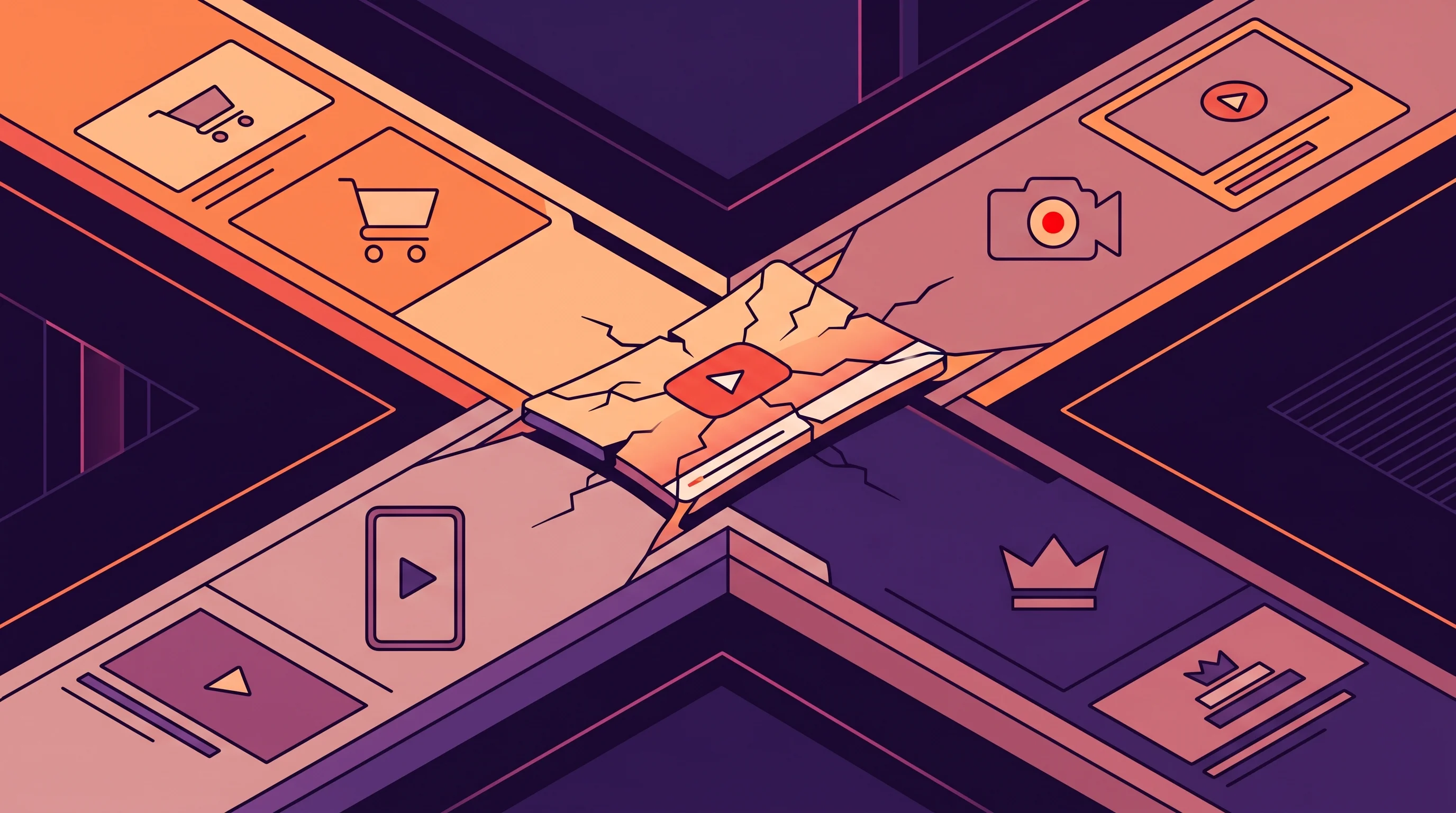
YouTube Thumbnails for Every Revenue Stream: A 2026 Creator Guide
Running YouTube Shopping, live streams, Shorts, and memberships? Your single thumbnail approach is probably hurting at least one of them. Here is how to adapt.

YouTube Channel Membership Thumbnails: Design Without the Backlash
How to design YouTube channel membership thumbnails that convert paying members without annoying your free viewers. Post-Linus Tech Tips playbook for 2026.
Ready to boost your CTR?
Stop losing clicks to boring thumbnails. Get AI-generated thumbnails in under 60 seconds.
Get Started Free